The Best Time of Year for Tubing in Chiang Mai
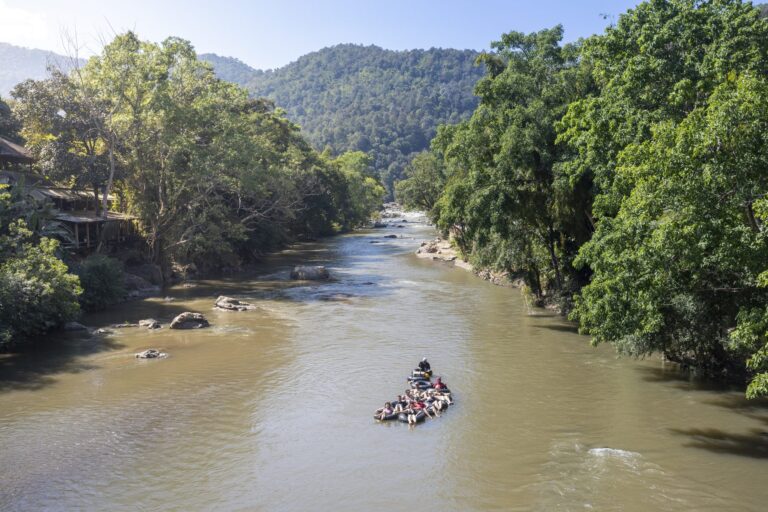
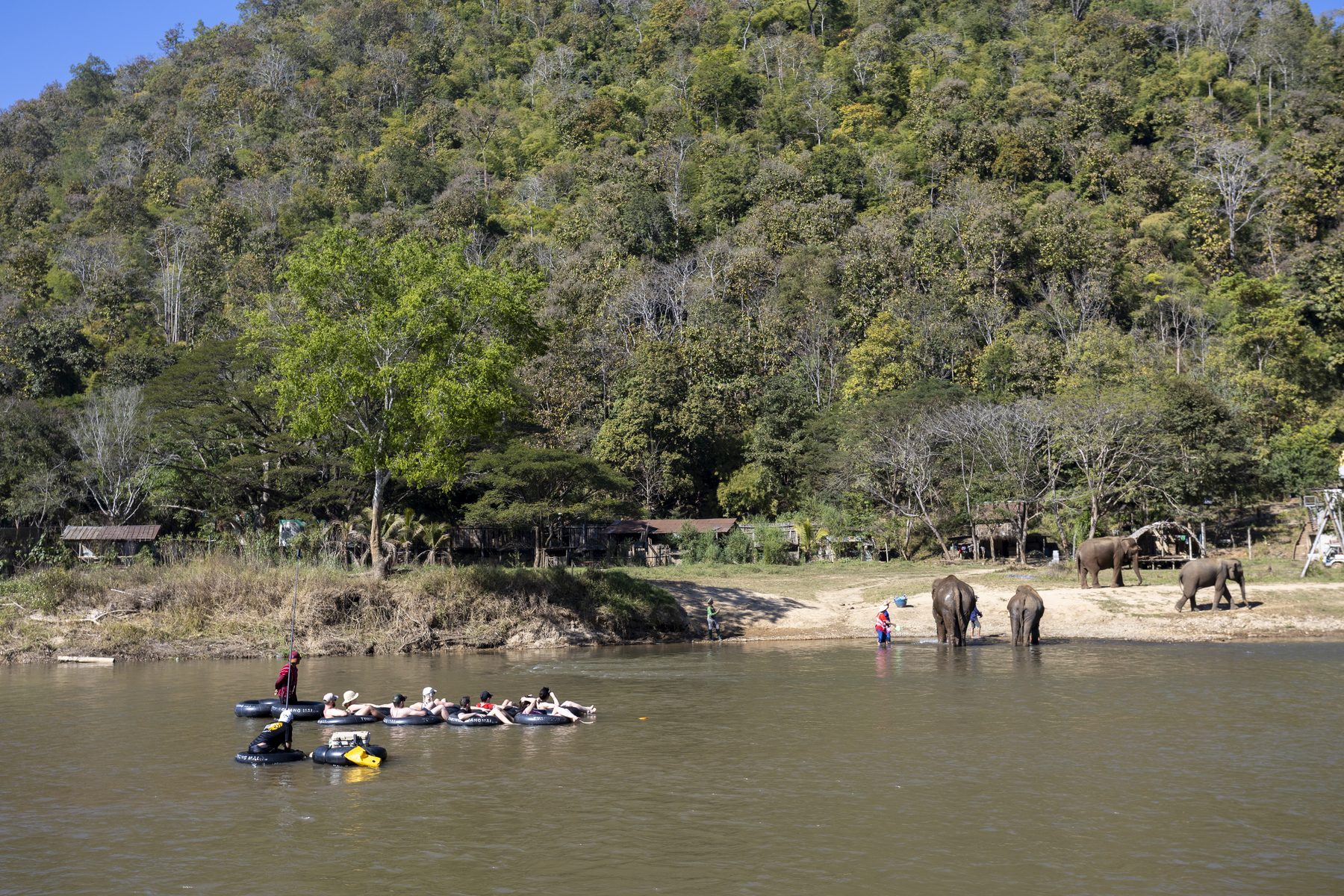
“When’s the best time to go tubing in Chiang Mai?” We get asked this constantly, and the honest answer is that there’s no single perfect month — there’s a trade-off, and which season suits you depends on what you want out of the day. Here’s how the year actually feels on the Mae Taeng, from the people who float it in every season.
Cool season: November to February
If you want the postcard version of northern Thailand — clear skies, clean air, warm days and cool evenings — come between November and February. This is Chiang Mai’s high season for a reason. The weather is at its kindest, the valley is at its most photogenic, and the river runs at a comfortable middle level: quick enough to feel like a float rather than a soak, gentle enough that nobody’s white-knuckling their tube.
The catch is that everyone else knows this too. These are our busiest months, and the stretch around New Year (roughly 20 December to early January) is the peak of the peak. If your dates fall in cool season, book further ahead than you think you need to — the good morning slots go first.
Hot season: March to May
March through May is hot — properly hot by April — which is exactly when spending your afternoon in a river starts to sound like the smartest plan you’ve made all trip. There’s an upside on the water, too: levels drop as the dry months wear on, so the float slows into a long, lazy hour-plus of drifting, and the calmer current is the friendliest of the whole year for young children and nervous swimmers.
We’d rather tell you straight than have you arrive surprised, so: northern Thailand has a burning season, roughly late February into April, when agricultural fires push air quality down across the whole region. The river valley out in Mae Taeng is often clearer than the city itself, but if haze is a genuine dealbreaker for you, this is the window to keep an eye on. Check an air-quality app in the days before you travel and you’ll know what you’re walking into.
Green season: June to October
From June to October the rains arrive — usually a heavy burst in the afternoon rather than grey drizzle all day — and the whole valley turns a ridiculous green. This is the quiet season: fewer crowds, easier bookings, and the jungle at its most alive. The river runs fuller and faster, which makes the float quicker and a little more exciting. Think closer to 50 minutes when the water’s high, versus over an hour when it’s low and slow.
People worry about the rain, but you’re getting wet anyway — a shower on the river is just more river. Normal rain never stops us; only a serious storm cancels a trip, and that’s a safety call our guides make on the day, on the day’s conditions alone. One green-season bonus worth knowing: if you add the Sticky Waterfall, its water comes from underground rather than off the mountains, so it stays clear and climbable even after heavy rain, when other waterfalls turn brown and slippery.
It all comes down to the water level
If there’s one thing to take away, it’s this: the season you pick mostly changes how the river behaves. Higher water in the green season means a faster, livelier float. Lower water in the hot months means a slow, easy drift that’s ideal if you’re bringing little ones or anyone unsure in the water. Cool season sits comfortably in between. None of it changes the essentials — a guide on the water with you, life jackets for everyone, tubes tied together as one — just the character of the day.
So, the short version
Cool season (Nov–Feb) for the best all-round weather and the liveliest camp. Green season (Jun–Oct) for lush scenery, low crowds and a faster float. Hot season (Mar–May) for the calmest water and the quietest river — with one eye on the haze. There’s genuinely no wrong time to be on the Mae Taeng. There’s just the version of the day that fits you best.
We float the Mae Taeng every single day, all year round — pick your date and come see for yourself.
Check dates & book your float →Read next: What to pack for river tubing in Chiang Mai